Real-World Assets in DeFi: Tokenization, Settlement, and Legal Claims
Learn how RWA tokens connect legal rights, custody, valuation, cash settlement, redemption, and DeFi collateral into one layered claim.
Read the guide →Tokenization can make assets programmable and easier to transfer, but the digital token is only one part of the product. The legal claim, custodian, administrator, payment leg, valuation, and redemption path determine the complete exposure.
Identify what the holder owns, who owes the obligation, which law governs it, and whether the ledger is the official ownership record. A common token standard does not create a common economic claim.
For RWA products, read offering, custody, servicing, valuation, and redemption documents alongside contract code.
Map origination, issuance, transfer, income, corporate actions, collateral use, and redemption. Asset and payment legs may use different systems, creating timing and counterparty dependencies.
Atomic settlement can reduce principal risk while increasing liquidity needs. Slow offchain valuation and redemption cannot be made instantly liquid by interface design alone.
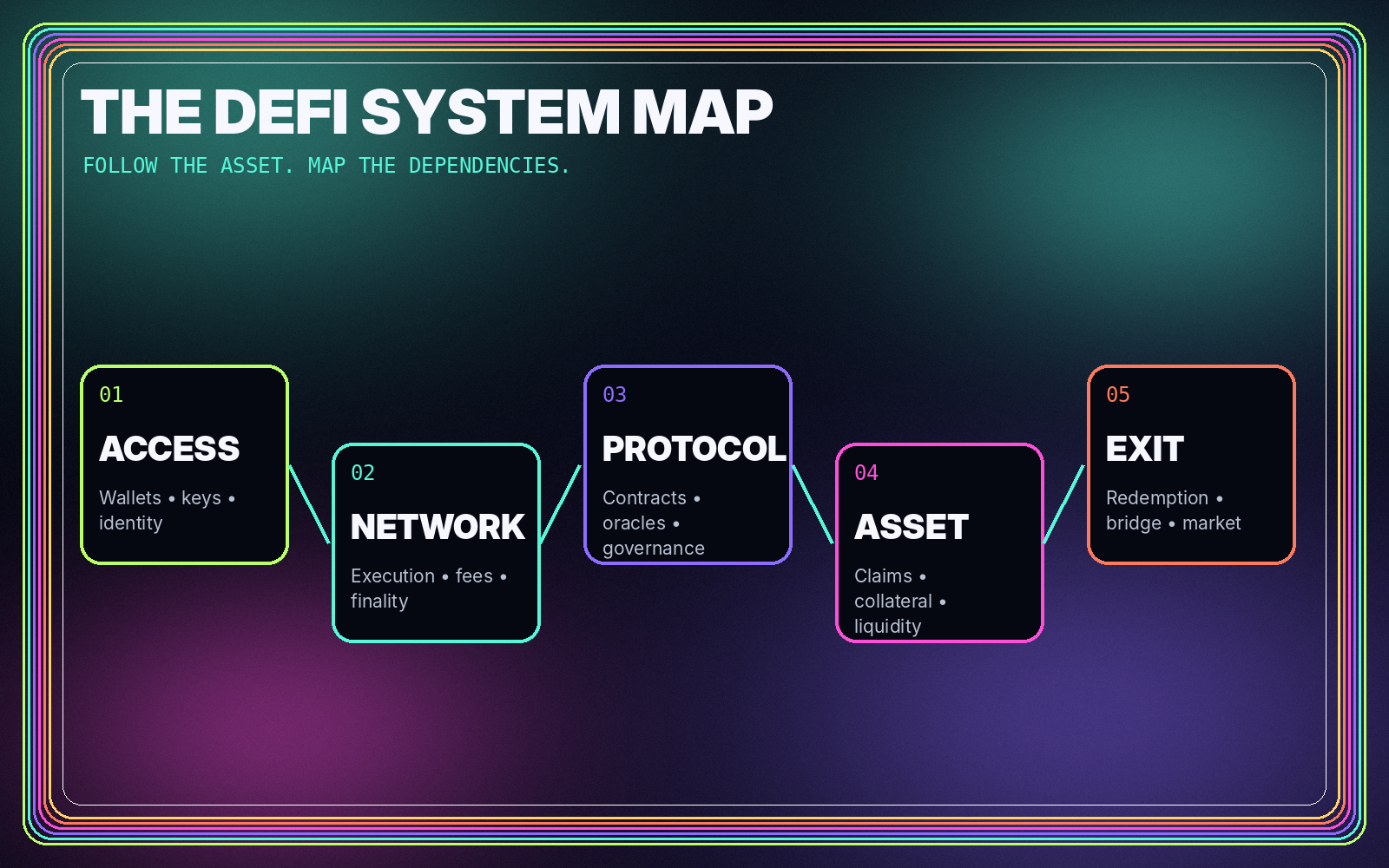
Separate access, services, asset, and platform. Then identify upgrade keys, transfer controls, oracles, custodians, administrators, and dispute processes.
Composability can layer leverage on top of a tokenized claim. Follow every contract and institution before treating the final position as a simple asset.
Long-form explanations that expand the network, market, token, and risk layers introduced above.
Learn how RWA tokens connect legal rights, custody, valuation, cash settlement, redemption, and DeFi collateral into one layered claim.
Read the guide →
Use the access, service, asset, and platform layers to understand tokenized claims, interoperability, custody, data, and governance.
Read the guide →
Compare USDC and USDT through issuer, network, liquidity, redemption, bridge, lending, and depeg risk rather than ticker alone.
Read the guide →Write it down before you enter: asset, network, contract, dependency, liquidity, and the action you will take when assumptions change.