DeFi Utopia Explained: A Beginner’s Guide to Decentralized Finance
A practical introduction to wallets, smart contracts, lending, exchanges, yield, and the risks every DeFi beginner should name before acting.
Read the guide →DeFi turns financial rules into software that compatible wallets can call directly. The opportunity is open access and composability; the cost is that users must understand keys, contracts, markets, and irreversible actions.
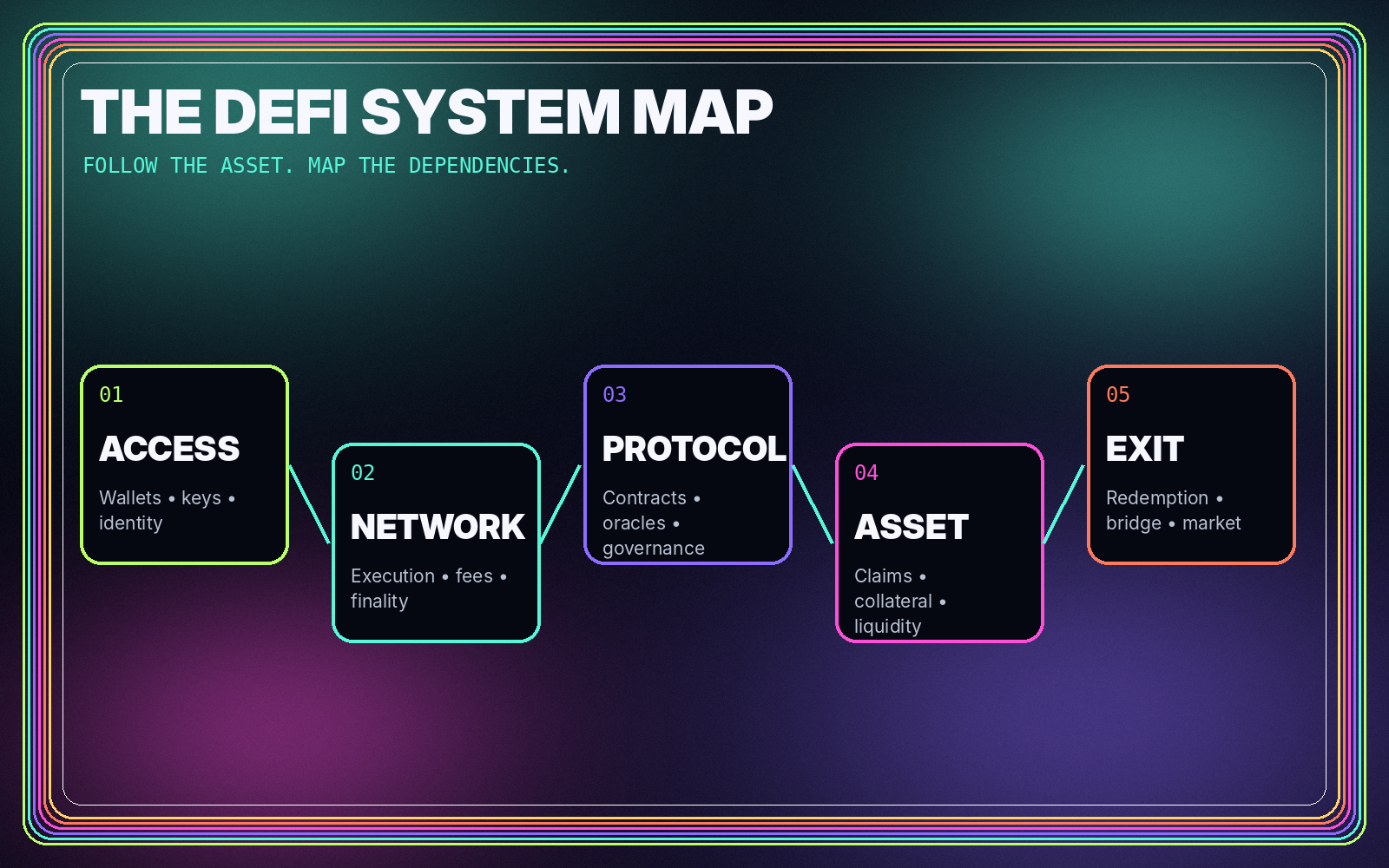
Start with the base network, then identify the assets, smart contracts, infrastructure, and interface involved. A swap, loan, or vault deposit may touch every layer even when the app presents one button.
Composability lets protocols connect, but it also lets failures travel. A stablecoin, oracle, bridge, or governance change can affect several positions at once. Dependency mapping is more useful than treating each app as an isolated brand.
Common actions include exchanging tokens, supplying liquidity, lending, borrowing, staking, holding tokenized claims, and participating in governance. Each action produces a different asset or obligation, so the first question should be: what will I own or owe after the transaction?
Yield can come from borrowers, traders, network issuance, underlying assets, or temporary token incentives. Sustainable analysis traces who pays and why rather than relying on an annualized number.
Use a separate activity wallet, verify the official domain and contract, start with a small amount, read approvals, simulate the transaction, and record the result. Keep enough native network token to exit later.
DeFiUtopia is an educational publication. It does not provide personalized financial, legal, or tax advice, and it does not promise that a protocol, token, or strategy is safe.
Long-form explanations that expand the network, market, token, and risk layers introduced above.
A practical introduction to wallets, smart contracts, lending, exchanges, yield, and the risks every DeFi beginner should name before acting.
Read the guide →
Understand Ethereum accounts, gas, token approvals, protocol composability, layer 2 networks, bridges, and a disciplined transaction workflow.
Read the guide →
Classify token rights, supply, control, liquidity, bridges, yield, governance, and portfolio dependencies before relying on an altcoin market.
Read the guide →Write it down before you enter: asset, network, contract, dependency, liquidity, and the action you will take when assumptions change.