Altcoins in DeFi: A Practical Risk Framework for Tokens and Liquidity
Classify token rights, supply, control, liquidity, bridges, yield, governance, and portfolio dependencies before relying on an altcoin market.
Read the guide →DeFi risk is layered. A position can be economically sound and still fail through a compromised wallet, bridge, oracle, upgrade key, interface, or thin exit market. The goal is to make every dependency visible before capital is committed.
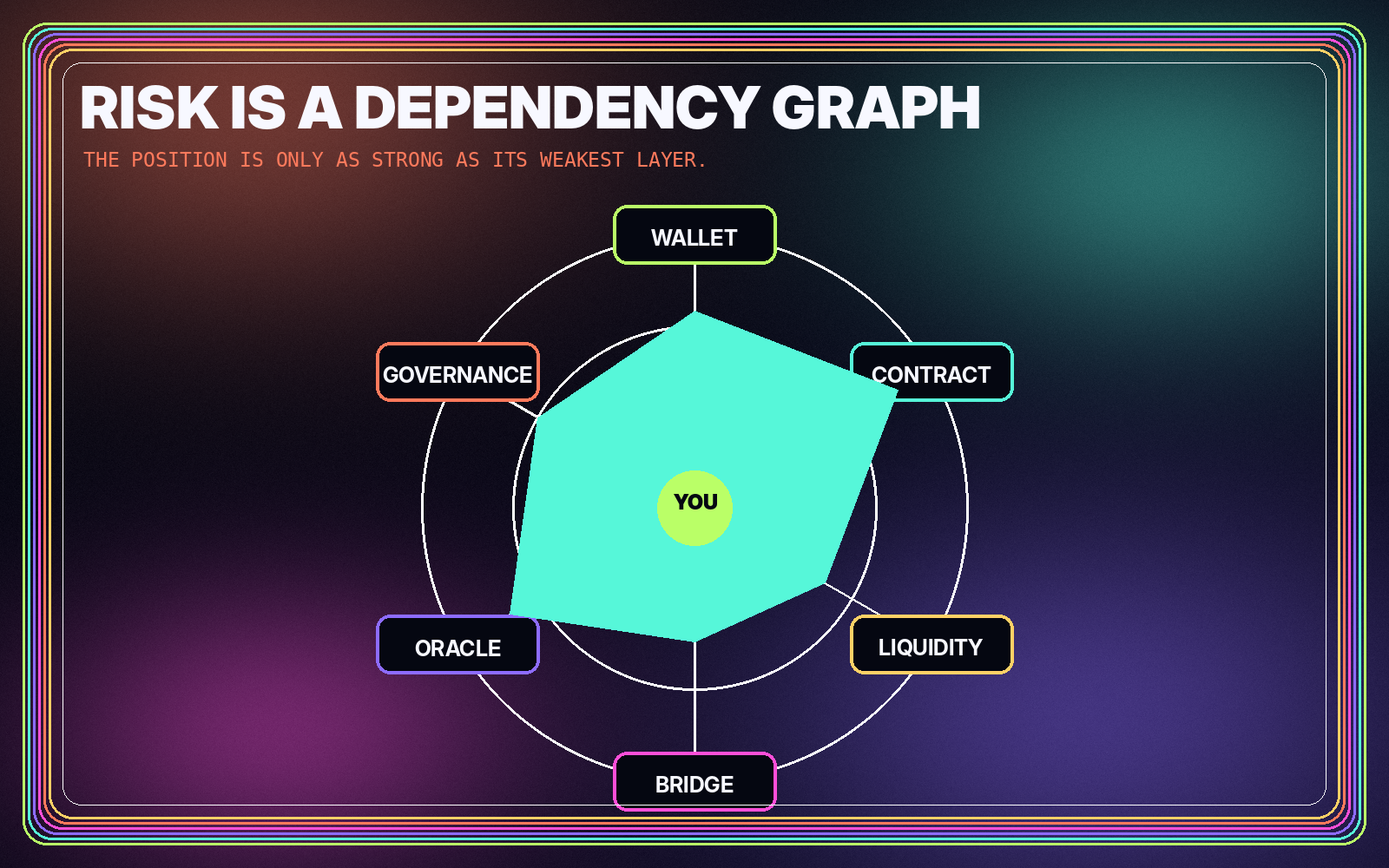
Review contract audits, deployed code, upgradeability, pause powers, oracle design, multisignatures, timelocks, and bug-bounty coverage. An audit is evidence of review, not insurance.
Map who can change parameters or move assets. Emergency controls can reduce damage while also creating trust and access risk.
Measure slippage, pool depth, collateral volatility, liquidation thresholds, utilization, stablecoin exposure, and redemption timing. Model the position under stress rather than extrapolating a calm-period quote.
Leverage and composability can turn a small price move into forced selling. Nested receipt tokens can hide the original asset and dependencies.
Separate long-term holdings from active wallets, verify domains and contracts, read message signatures, limit approvals, and keep offline recovery material. Ignore unsolicited tokens and support messages.
Record every position, network, protocol, and transaction hash. A clear inventory is part of security because forgotten positions cannot be monitored or exited responsibly.
Long-form explanations that expand the network, market, token, and risk layers introduced above.
Classify token rights, supply, control, liquidity, bridges, yield, governance, and portfolio dependencies before relying on an altcoin market.
Read the guide →
A practical introduction to wallets, smart contracts, lending, exchanges, yield, and the risks every DeFi beginner should name before acting.
Read the guide →
Design safer AI-assisted DeFi workflows with verified data, bounded tool access, transaction simulation, prompt-injection defenses, and human review.
Read the guide →Write it down before you enter: asset, network, contract, dependency, liquidity, and the action you will take when assumptions change.